

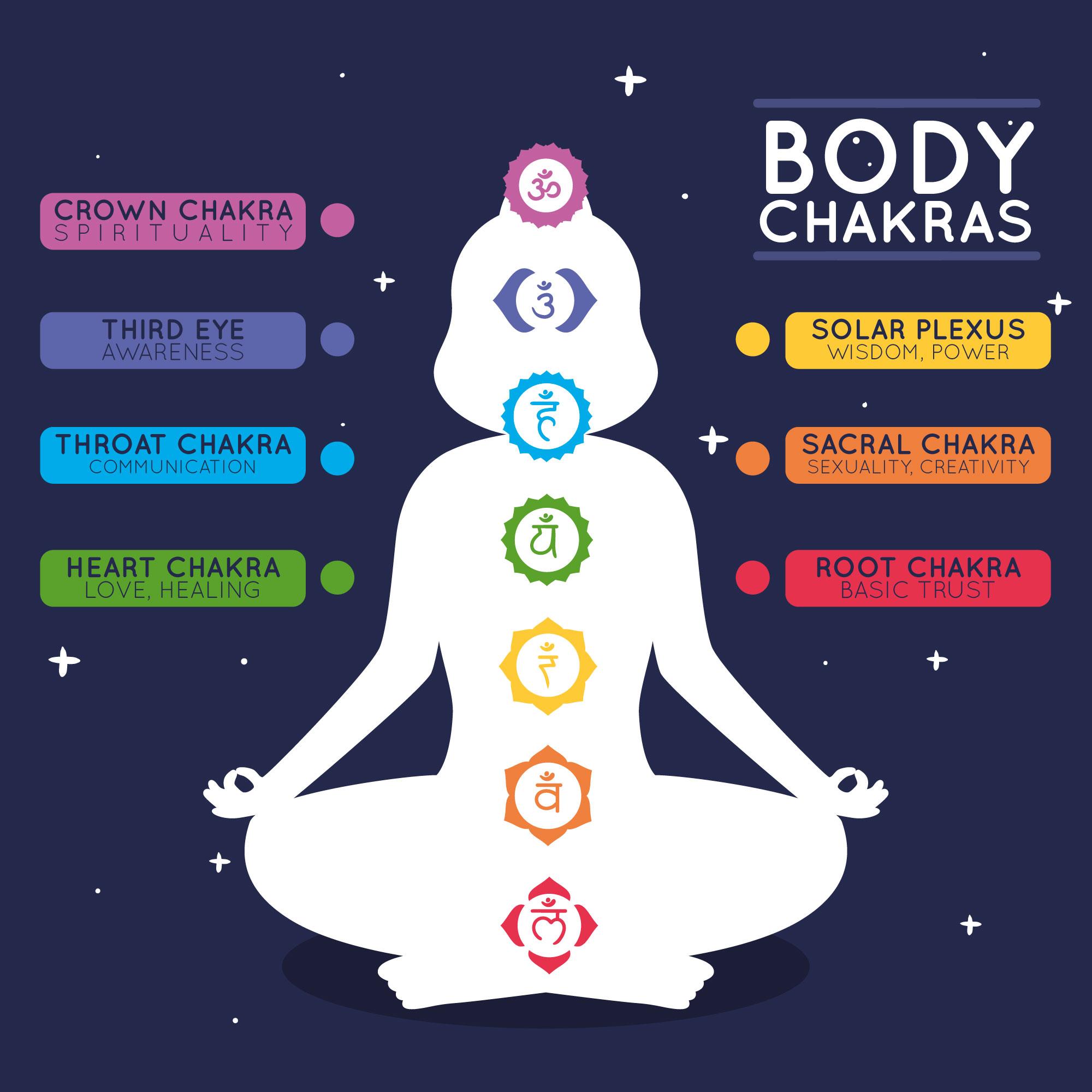

What are the Chakras and their levels?
Chakras are spinning energy centers described in yoga and meditation as gateways for life force (prana). From ancient Indian texts, the chakra system maps how energy, emotion, and awareness move through the body. Today, Chakras serve as practical anchors in yoga, helping build presence, balance, and well-being. This article offers a simple overview of the seven main Chakras and explores “levels” or layers using two common frameworks: the koshas (sheaths) and a gross-to-subtle energy progression.
Part 1: The seven main Chakras—where they are, what they mean, and how to balance them
1) Muladhara — Root Chakra
- Location: Base of spine near coccyx.
- Color/energy: Red; earth energy, grounding.
- Themes: Safety, stability, belonging, physical security.
- Balanced: Feeling secure, practical, steady.
- Imbalanced: Fear, insecurity, financial worry, restlessness.
- Yoga actions: Grounding poses like Mountain (Tadasana), Warrior I, Triangle; seated Sukhasana with earth awareness; slow diaphragmatic breath; feet touching ground for support.
- Note: Muladhara is the base. Rooting practice helps if anxious or unsettled.
2) Svadhisthana — Sacral Chakra
- Location: Lower abdomen/pelvic area.
- Color/energy: Orange; water energy, fluidity.
- Themes: Creativity, sexuality, emotion, receptivity.
- Balanced: Comfortable creativity, healthy boundaries, emotional ease.
- Imbalanced: Suppressed emotions, rigidity, guilt, excessive reactivity.
- Yoga actions: Hip openers like Bound Angle, Pigeon, Lizard with mindful breath; gentle hip circles in Sun Salutations; gentle abdominal lifts (Uddiyana Bandha).
- Note: Svadhisthana invites flow and pleasure; ease in the hips unlocks creativity.
3) Manipura — Solar Plexus Chakra
- Location: Upper abdomen/diaphragm area.
- Color/energy: Yellow; fire, personal power.
- Themes: Will, self-esteem, metabolism, transformation.
- Balanced: Confident action, clear decisions, healthy boundaries.
- Imbalanced: People-pleasing, indecision, anger, and digestive issues.
- Yoga actions: Core poses like Boat (Navasana), twists; steady warming breath (ujjayi); power postures like High Lunge.
- Note: Manipura is the drive center; core work and focus boost motivation and calm impulsivity.
4) Anahata — Heart Chakra
- Location: Center of chest near heart.
- Color/energy: Green/pink; air element.
- Themes: love, compassion, empathy, forgiveness.
- Balanced: Open-hearted connection, resilience, self-compassion.
- Imbalanced: Detachment, hypersensitivity, social overwhelm.
- Yoga actions: Heart openers like Bridge, Wheel, Camel, Cobra; chest-opening breath; gentle hum or “Yam” mantra.
- Note: Anahata softens toward self and others; slower breath aids kindness.
5) Vishuddha — Throat Chakra
- Location: Throat region.
- Color/energy: Blue; sound, self-expression.
- Themes: Communication, truth, listening, authenticity.
- Balanced: Clear, honest speech; good listening.
- Imbalanced: Fear of speaking, throat tension, excessive talking.
- Yoga actions: Neck/shoulder stretches; supported fish or gentle shoulder stands; calm ujjayi breathing.
- Note: Vishuddha links inner truth to outer action; honest communication deepens resonance.
6) Ajna — Third Eye Chakra
- Location: Forehead between eyebrows.
- Color/energy: Indigo; insight, intuition.
- Themes: Clarity, perception, inner guidance.
- Balanced: calm focus, strong intuition, discernment.
- Imbalanced: Overthinking, confusion, doubt, disconnection.
- Yoga actions: Balancing poses with eyes closed; meditation; visualization of light at the brow; alternate nostril breathing.
- Note: Ajna invites trust in inner guidance; stillness helps this center.
7) Sahasrara — Crown Chakra
- Location: Top of head.
- Color/energy: Violet/white; higher connection, consciousness.
- Themes: Unity, transcendence, spiritual insight.
- Balanced: Peace, openness, compassion.
- Imbalanced: Disconnection, cynicism, superficial spirituality.
- Yoga actions: Quiet seated meditation; Child’s Pose with crown supported; long soft exhales inviting spaciousness.
- Note: Sahasrara is about being, not doing; quiet practice and gratitude support this chakra.
Part 2: Levels of Chakras—two practical frameworks
“Levels” refer to layers of experience or growth stages. Two ways to think about chakra levels:
Framework A: The five koshas (sheaths around the self)
- Layers from outer to inner:
1) Annamaya kosha — physical body.
2) Pranamaya kosha — energy body (breath, life force).
3) Manomaya kosha — mental-emotional layer.
4) Vijnanamaya kosha — wisdom, intuition.
5) Anandamaya kosha — blissful, deep joy. - Chakras relate by supporting multiple koshas; grounding supports physical and energy bodies, while meditation touches wisdom and bliss. Balanced Chakras aid holistic well-being.
Framework B: Gross to subtle progression
- Level 1: Physical grounding/safety (Muladhara).
- Level 2: Emotional flow/creativity (Svadhisthana).
- Level 3: Personal power/transformation (Manipura).
- Level 4: love, connection, truth (Anahata, Vishuddha).
- Level 5: Insight, higher connection (Ajna, Sahasrara).
Practicing with levels
- Begin grounding at Muladhara and move upward, spending time on each chakra for balance.
- Use intention and breath to shift through levels (e.g., “I ground myself; I listen to my breath; I let insight arise”).
- Chakra opening is ongoing awareness and self-compassion, not a one-time event.
Part 3: Practical guidance for a simple yoga-based chakra practice
- Create a 20–40 minute sequence covering all Chakras:
- Muladhara: grounding poses (Mountain, gentle squats, walking meditation) with long exhales.
- Svadhisthana: hip openers (Bound Angle, Pigeon) with soft, continuous exhale.
- Manipura: core poses (Boat, lunges) to engage the solar plexus.
- Anahata: heart openers (Bridge, Camel) with compassionate breath.
- Vishuddha: neck release, alternate nostril breathing, seated reflection.
- Ajna: seated meditation or soft gaze with visualization.
- Sahasrara: quiet rest (Savasana) with crown awareness.
- Match breath to chakra: slow exhale for grounding; circular breath for hips; energizing breath for core; relaxed throat breath; quiet, focused breath for Ajna and Sahasrara.
- Optional: Mantras (Lam, Vam, Ram, Yam, Ham, Om), mudras, and color visualizations for each chakra.
Part 4: A balanced view of Chakras—what they are, what they aren’t
- Chakras are a symbolic map for energy and emotions, not literal anatomy or medical tools.
- Balancing Chakras means growing awareness and choosing steady, open, compassionate practices.
- Chakra work complements science, aiding stress relief and well-being alongside medical care.
Concluding thoughts
Chakras offer a helpful lens for exploring the body, breath, and awareness in yoga. The seven centers—from root to crown—progress from grounding to insight and connection. Using levels helps structure practice, starting with physical and energy foundations, moving to emotional clarity and authentic expression, and ending in quiet awareness. Beginners can start simply with breath, gentle postures, and inner listening. Focus extra attention where needed and observe changes. Consistency and compassion guide the process best. Remember, Chakras are a language of experience, not strict rules. Use them to breathe easier, stand taller, and feel more connected—physically, emotionally, and spiritually—through simple yoga practices supporting balance and well-being.